Beginners / regulation
Crypto prediction for beginners
A first-principles guide to forecasts, odds, taxes, and the questions worth asking first.

I am in my forties, a father, and my workday still happens at home. My wife is here, and our son is preschool age, so the house does not stay quiet for long. A typical afternoon looks like this: I start a research note, a small voice asks a question, and I have to decide whether a chart on the screen is actually a reason to act. That is why I prefer beginner-level crypto prediction writing that slows the reader down. The useful skill is not picking a winner. It is knowing when a headline is only a headline.
If you are new to this subject, start with definitions. A price is what someone is willing to trade at now. A prediction is a claim about later. A prediction market is a contract that pays if a later fact matches a written rule. Those three objects get collapsed into one word on social feeds. Keeping them apart will save you from treating entertainment as a plan.
Learn the claim before you learn the coin
Beginners often ask which asset will go up. A more useful first question is what kind of statement you are reading. Is it a target, a range, a probability, or a story with a number attached? Can you name the date? Can you name the person or model? If any of those answers is missing, you do not yet have a forecast. You have a prompt to keep scrolling.
Read one official overview before you read ten targets. The Investor.gov cryptocurrency glossary is written for the public and does not try to sell a call. The CFTC customer advisory on cryptocurrency explains common risks in the same spirit. Neither page will tell you what happens next. Both will make a later prediction easier to judge.
It also helps to know that scams borrow the language of forecasts. Guaranteed returns, pressure to act immediately, and requests for remote access are not research. The FTC page on cryptocurrency and scams is a clear public warning. If a prediction arrives with a payment instruction, treat it as a sales attempt until proven otherwise.
Taxes and records are part of the beginner kit
People new to crypto often discover the tax conversation after a transaction, not before. In the United States, the Internal Revenue Service treats virtual currency as property for tax purposes and publishes plain-language pages on the topic. The IRS virtual currencies page is the place to start. This article is not tax advice. It is a reminder that a prediction which tempts you to trade can also create a record-keeping job.
If you later use a prediction market or an event contract, the tax and legal treatment may differ from holding an asset. Keep the confirmation, the date, and the product name. Do not rely on a screenshot inside an app. A beginner who builds that habit early will have less reconstruction work later. The same research-before-buy instinct applies: understand the object before you enter it.
Regulation also varies by country and by product. Some venues are open to you. Some are not. A forecast published as an article is usually speech. A contract you can buy may be a financial product. If you cannot tell which one you are looking at, pause. Official pages exist because this confusion is common, not because the reader is behind.
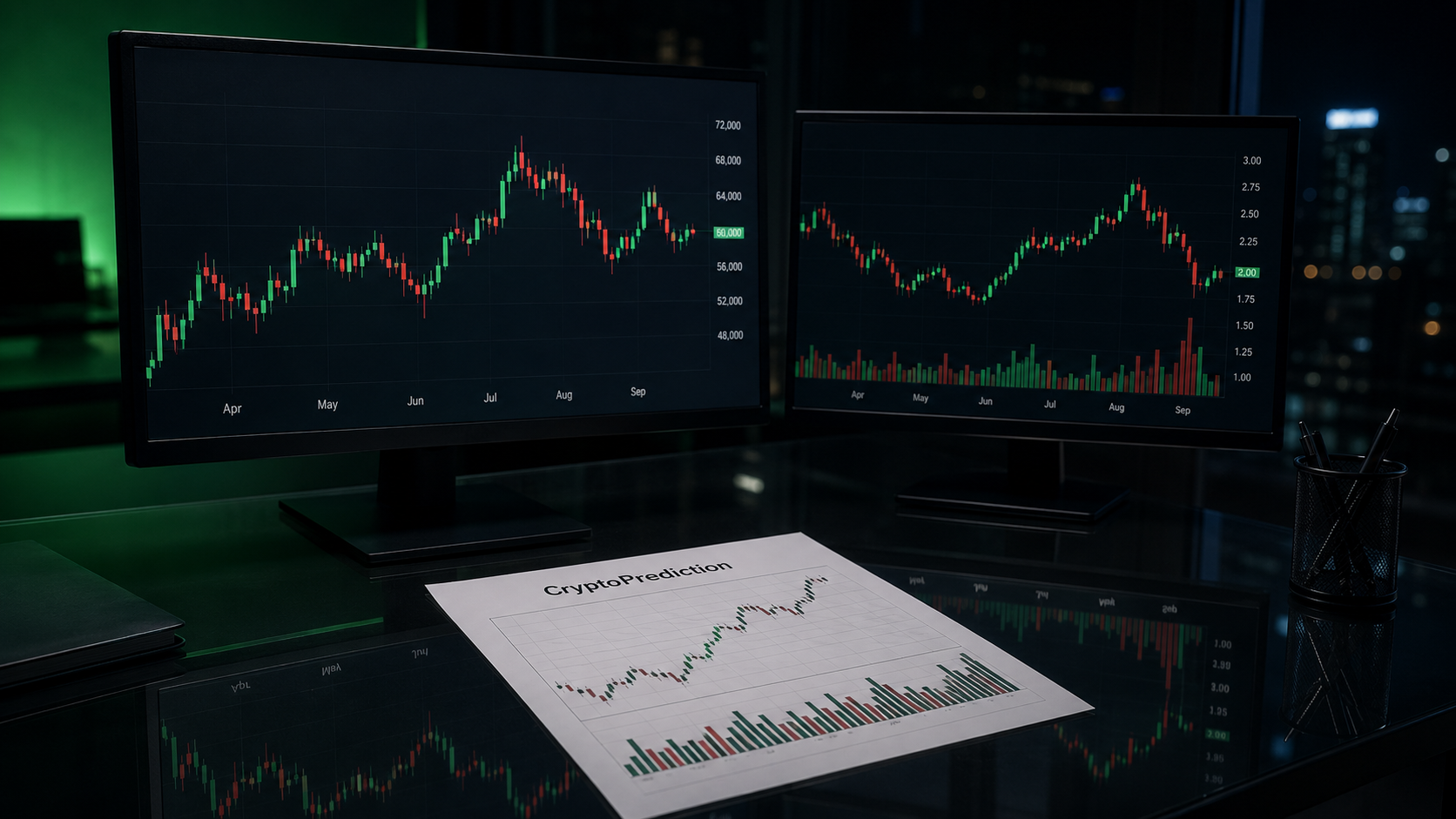
A simple checklist you can reuse
Use the same five questions every time a prediction appears. What is the exact claim? What is the date or window? Who made it, and what do they sell? What method or market produced the number? What would make the author change the view? If you cannot answer those questions in a few lines, you are not ready to treat the claim as information.
Then add one more question that is easy to skip: what happens if you do nothing? Many forecasts are written as if inaction were impossible. In a house with a preschool-age child and a workday that already has enough decisions, inaction is often the adult choice. A prediction can still be interesting. It does not have to become a task.
When you do want a deeper read, prefer sources that keep the original wording available. A dated note you can reopen is better than a disappearing story. A market with a published resolution rule is better than a poll with no rule. CryptoPrediction.com can be a home for that kind of careful public work. The beginner job, today, is smaller: keep the vocabulary honest, keep official references close, and keep a headline from turning into a decision you did not mean to make.
A last beginner habit is to separate curiosity from commitment. You can follow a public outlook, write down the claim, and wait for the date without opening an account. That is still research. If you later decide to use a product, read the official pages first and keep your own notes. The SEC crypto-assets page is another short official reference that belongs in that folder. None of those pages will make the next move for you. They will make the first move slower, which is the point.
Build a small vocabulary page in those notes. Define asset, token, wallet, exchange, custody, forecast, probability, target, and time horizon in your own words. Add a source beside any definition that still feels uncertain. This is not schoolwork for its own sake. Crypto writing often shifts between those objects quickly, and a reader can agree with a sentence while misunderstanding the thing the sentence describes.
Next, practice on an old prediction whose deadline has already passed. Hide the outcome, record what you think the claim means, then reveal what happened. Check whether the original author preserved the wording and acknowledged the result. This exercise costs nothing and shows how easily memory rewards a vague call. It also makes a calibrated range feel more useful than a dramatic target with no date.
In my forties, I value fewer decisions made with better records. That is the beginner advantage worth keeping. There is no need to imitate the pace of a trading screen. A clear question, a dated note, an official reference, and permission to do nothing form a sound starting kit. Curiosity can remain curiosity until the evidence and personal circumstances support something more.


Michael Santiago develops premium domain names and the companies behind them through OnlineBusiness.com. He founded i-Newswire.com, later iNewswire.com, and helped build Newswire.com. The business sold in 2022 for 44 million dollars. Brand, PR, and SEO work now runs through GoPR.com, with Signage.com as a live category case.